La base de liens Encyclopédie Marikavel des noms de lieux. Lettre E





- Avrolles < Eburobriga, France; Yonne.
- Bram < Eburomagus, France; Aude.
- Brunn < Eburodunum, Allemagne;
- *Eburobrittium : nom de Lusitanie (cité par Pline, Histoire Nouvelle, IV,113)
- *Eburo Castellum : voir infra.
- Embrun < Eburodunum, France; Hautes-Alpes.
- Evreux < Eburovices, France; Eure.
- Evry < (Eb(u)riacus : France; Seine-et-Oise.
- Yverdon < Eburodunum, Suisse;
- Yvré-le-Polin < (Eb(u)riacus : France; Sarthe.
- Ravenna 10744 : EBURO CASLUM.
The emendation Cas[tel]lum is that of Schnetz, and seems obvious, despite the doubts of R&C. Probably the word was abbreviated on the map which Ravenna used as a source.
DERIVATION. For *Eburo-, either 'yew-tree' or a personal name, see the previous entry. In this form and in this area, 'yew-fort' seems the more likely meaning. Castellum is 'fort' and is known in other place-names, e.g. in the inscription of the vicani at Velunia on the Antonine Wall, and in Princastellum of Ravenna 62,13 (for Perincastellum > Bernkastel on thé Moselle). Rather than being a part of the place-name proper, the Latin word may stand in apposition to Eburo, as do other designations in the Ravenna list. Schnetz thinks that the name as recorded may stand for original *Eburodunum, for which three Continental analogues are mentioned in the previous entry.
IDENTIFICATION. Unknown, but apparently in southern Scotland or Northumberland.
Ptolémée, II,3,2 : Itouna Eisxuris ( = Ituna Aestuarium). (c. 150 ap. J.C);
Register of the Priory of Wetherhal.: Edene, Eden, 1131 ff. WR
cf : A.LF. Rivet & Smith : The Place-names of Roman Britain, p 380; Eilert Ekwall : The Concise Oxford Dictionary of English Place-Names, p 160.

* A.L.F Rivet & C. Smith, p. 358 :
EIDUMANIS (?)
SOURCE
- Ptolemy II, 3, 4 : Eidoumanios potamon ekbolai ( = EIDUMANIS FLUVII OSTIA), vars. Eidoumanios
( = SIDUMANIS), Idoumaniou
( = IDUMANII), Eidoumania
( = EIDUMANIA), Eidoumaniou
( = EIDUMANII)
Müller's preferred form is Sidumanis, present in six MSS; we follow U and many others.
DERIVATION. This name is mysterious. Bradley suggested that British *dumno- 'deep' is involved, but this seems impossible when all MSS show -man- (-man-). If the name does have Sidu- there might be an analogue in Gaulish Sidoloucum > Saulieu (Côte-d'Or, France) which has been thought to contain *sido- 'stag'. Ekwall ERN 467-68 identifies the river in question with the Lincolnshire Witham (Widma c. 1025, etc.), a name which he thinks derives without difficulty from a British *Uidumanios; to reach this, Ptolemy's entry must be adjusted by supposing initial Ou- omitted (for a comparable omission, compare Votadini as recorded by Ptolemy) and by supposing that -ei-stands for short i, as it sometimes does in Ptolemy (Ekwall compares Ptolemy's Eitios for "Itios, and notes that the variant "Idou- supports a reading with short i ). The restored *Uidumanios then has, according to Ekwall, a first element as in Vidubriga, Viducasses, etc., now represented by Welsh gwydd and Old Irish fid 'forest', or, if the first vowel is ei-, by Welsh gwydd and Old Irish fiad 'wild'; the second element is perhaps a root cognate with Latin manare 'to flow'. There are too many uncertainties here, and Jackson LHEB 558 thinks the proposed *Uidumanios 'a very doubtful form '. In view of the major variations in Ptolemy's forms, the name is best left in the category of the unresolved.
IDENTIFICATION. The major objection to Ekwall's identification with the Lincolnshire Witham is that the position given by Ptolemy places Eidumanis south of the River Yare (Norfolk) and below a now unidentifiable coastal 'projection'. To suit his case, Ekwall has to argue that Ptolemy got his points out of order. Bradley thought that Ptolemy's position suited the Essex River Blackwater, and we think this right (p. 138). There is then the curiosity that there is a town of Witham on the Blackwater (recorded as Witham in 913, a form which Ekwall in EPN finds strange); if it could be shown - which it cannot - that this Witham took its name from the river, it might be possible to transfer Ekwall's argument from Lincolnshire to Essex, as it were. But as remarked above, there are too many uncertainties for this to be possible. See also PENTA in the Appendix.

Elle arrose Ste-Beuve-en-Rivière, St-Germain-sur-Eaulne, Londinière, Douvrend, Envermeu, Bellengreville, Ancourt, Martin-Eglise. (IGN : 2109-O; 2009-E; 2008-E; 2008-O).
Étymologie :
- DDR : "... le germanique helina, endroit bourbeux, est possible."
- Fr. de Beaurepaire : Alna.
JCE : noter la présence du lieu-dit Epinay en aval de la source (près des Fontaines), sur la commune de Sainte-Beuve-en-Rivière (Epinay = lieu de culte à Cybèle ?).
Étymologie :
- DR : Humbaldingahem, 826 : nom d'homme germ. Humbald, avec double suffixe -ing-hem.
- R. Delmaire, Civitas Morinorum, p 60 : Humbaldingahem in pago Tarvenensi, 867;
JCE : Ebblinghem se trouve à 1 km à l'est de la voie romaine, aujourd'hui la départementale D 255, de Tervanna / Thérouanne à Castellum Menapiorum / Cassel. Elle se trouve à 15 km au nord-est de Thérouanne, capitale de la Morinie orientale.
A supposer que l'on puisse identifier ce toponyme au personnage Himbaldus du texte de Geoffroy, lequel Himbaldus aurait été en charge de cette ville et de ce pagus, rien ne s'oppose à une intervention rapide d'un point à un autre, dans les deux sens. La proximité de Renescure n'est soulevée que comme simple hypothèse de travail, en supposant un possible rattachement de ce dernier toponyme à une forme pouvant évoquer Rennes, et en attendant que l'archéologie puisse apporter quelque lumière sur cette piste.
Il est à noter toutefois que l'on se trouve déjà à plus de 50 km de Sangatte.
|
|


page spéciale en cours de montage
Géographie
Histoire
Les rois et princes d'Écosse : voir Noms de Personnes.
- Kenneth Mac Alpin,
- Donald Ier, 858-862
- Constantin Ier, 862-877
- Aec, 877-878
- Eoachaid & Giric, 878-890
- Eochan, seul, 890-899
- Donald Ier, 899-900
Les comtés d'Écosse
| Noms | Capitales | |||
| Aberdeen | New-Aberdeen | |||
| Angus (ou Forfar) | Forfar | |||
| Argyle | Inverary | |||
| Ayr | Ayr | |||
| Banff | Banff | |||
| Berwick | Greenlaw | |||
| Bute | Rothsay | |||
| Caithness | Wick | |||
| Clackmannan | Clackmannan | |||
| Cromarty | Cromarty | |||
| Dumbarton | Dumbarton | |||
| Dumfries | Dumfries | |||
| Edinburg (ou Mid-Lothian) | Edinburgh | |||
| Elgin (ou Murray) | Elgin | |||
| Fife | Cupar | |||
| Haddington (ou East-Lothian) | Haddington | |||
| Kirkcudbright | Kirkcudbright | |||
| Inverness | Inverness | |||
| Kinross | Kinross | |||
| Lanark | Lanark | |||
| Linlithgow (ou West-Lothian) | Linlithgow | |||
| Mearns (ou Kincardine) | Stonehaven | |||
| Nairn | Nairn | |||
| Orkney | Kirkwall | |||
| Peebles | Peebles | |||
| Perth | Perth | |||
| Renfrew | Renfrew | |||
| Ross | Tain | |||
| Roxburgh | Jedburgh | |||
| Selkirk | Selkirk | |||
| Stirling | Stirling | |||
| Sutherland | Dornoeh | |||
| Wigton | Wigton |
Rivet & Smith, The Place-Names of Roman Britain, p 358 :
- Ptolémée, II,3,4 : Eidoumanios potamon ekbolai ( = EIDUMANIS FLUVII OSTIA);
variantes : Sidoumanios ( = SIDUMANIS); ' IIdoumanion ( IDUMANII); Eidoumania ( = EIDUMANIA); Eidoumanion ( = EIDUMANII).
Müller's preferred form is Sidumanis, present in six MSS; we follow U and many others.
DERIVATION. This name is mysterious. Bradley suggested that British *dumno- 'deep' is involved, but this seems impossible when all MSS show -man- (-man-). If the name does have Sidu- there might be an analogue in Gaulish Sidoloucum > Saulieu (Côte-d'Or, France) which has been thought to contain *sido- 'stag'. Ekwall ERN 467-68 identifies the river in question with the Lincolnshire Witham (Widma c. 1025, etc.), a name which he thinks derives without difficulty from a British *Uidumanios; to reach this, Ptolemy's entry must be adjusted by supposing initial Ou- omitted (for a comparable omission, compare Votadini as recorded by Ptolemy) and by supposing that -ei- stands for short i, as it sometimes does in Ptolemy (Ekwall compares Ptolemy's Eitios for Itios, and notes that the variant Idou- supports a reading with short i). The restored *Uidumanios then has, according to Ekwall, a first element as in Vidubriga, Viducasses, etc., now represented by Welsh gwydd and Old Irish fia 'forest', or, if the first vowel is ei-, by Welsh gwydd and Old Irish fiad 'wild'; the second element is perhaps a root cognate with Latin manare 'to flow'. There are too many uncertainties here, and Jackson LHEB 558 thinks the proposed *Uidumanios 'a very doubtful form '. In view of the major variations in Ptolemy's forms, the name is best left in the category of the unresolved.
IDENTIFICATION. The major objection to Ekwall's identification with the Lincolnshire Witham is that the position given by Ptolemy places Eidumanis south of the River Yare (Norfolk) and below a now unidentifiable coastal 'projection'. To suit his case, Ekwall has to argue that Ptolemy got his points out of order. Bradley thought that Ptolemy's position suited the Essex River Blackwater, and we think this right (p. 138). There is then the curiosity that there is a town of Witham on the Blackwater (recorded as Witham in 913, a form which Ekwall in EPN finds strange); if it could be shown — which it cannot — that this Witham took its name from thc river, it might be possible to transfer Ekwall's argument from Lincolnshire to Essex, as it were. But as remarked above, there are too many uncertainties for this to be possible. See also PENTA in the Appendix.
-------------
Étymologie incertaine et discutée. Sites possibles en Lincolnshire et en Essex.
* cf Rivet & Smith : p 358-59 :
- Ravenna 10923 : EIRIMON.
This name is a 'ghost'. It is a Latin transliteration of Greek eremos ( = eremos) which had figured on the map which the Cosmographer used as a source. It originated in the Greek adjective which Ptolemy attached to mention of two islands, "Adrou ( = Adru) and Limnou (= Limnu), both described as Eremos 'deserted, uninhabited' and as related geographically to Ireland. On a map the adjective was written a little separated from its island and was taken by the Cosmographer to be the name of an island, and entered in his list accordingly. This is the explanation of Dillemann (p.71)
-------------------
Ce mot, qui figure sur certaines cartes de Ptolémée, relié aux nom de deux îles : Adrou ( = Adru) et Limnou ( = Limnu), est en fait un dérivé du grec eremos, qui signifie déserte, désertique. Le fait que cet adjectif soit écrit un peu détaché des noms des îles a induit certains scribes en erreur, en laissant à penser qu'il s'agissait d'un autre nom spécifique.
SOURCES
- Ptolémée, II,3,1 : Eitios potamon ekbolai ( = EITIS FLUVII OSTIA) : embouchure du fleuve Eitis.
variantes : Eituos, Itnon, Ituos.
(Müller's Itios (= ITIS) is a conjecture only).
Ravenna 10920 (= R&C 294) : ELETE The form given by Ravenna has not previously been associated with Ptolemy's. It occurs in the list of western islands, but we know that this contains anomalies, and the present name could well have been written in the sea on a map and misread by the Cosmographer as though it pertained to an island. Initial El- is an almost certain sign of Fl(umen). FI Ete would then be an oblique case, -e(m), of the third declension.
DERIVATION. The form is too unsure to allow speculation. If It- is right, GPN 356-57 has a number of personal and place-names which may be relevant, including Ituna and Itium Promontorium (*Ition, Ptolemy II, 9, I), now Cap Gris Nez (Pas-de-Calais, France); also the Itius Portus of Caesar. Holder II. 82 quoted Stokes's derivation of these names from a root *i- as in Latin ire, Greek *i-enai, Old Irish ethaim 'I go', etc., which Watson CPNS 45-46 repeats without conviction. If Ei- is right there might be a vague parallel in British Eidumanis, but this is in itself a doubtful name. Eitis is not related to modem Etive.
IDENTIFICATION. Unknown, but a river of north-west Scotland.
***************
* Rivet & Smith, p. 359 :
EL- names in Ravenna
In the map which the Cosmographer used in part as a source, the abbreviation Fl for Flumen or Fluvius was evidently capable of being misread as El- (and sometimes as other letters, such as Pa- : Panovius for Fl Novius, etc.). It can be observed in TP — which of course was not the source for Ravenna as such — that a similar abbreviation there, Fl, could easily be mistaken and then miscopied. Since river-names on the map used by Ravenna seem to have been written largely along inland river-courses (not at the mouths), they were further misread as being names of places and were not entered by the Cosmographer in his river-list. The forms, with the entries to which we have referred them, are :
ELAVIANA 10914 (= R&C 286) — Abona (river)
ELCONIO I0547 (= R&C 3) — Cenio
ELETE 10920 (= R&C 294) — Eitis
ELTABO I0546 (= R&C 2) — Tavus 2
ELTAVORI 10648 (= R&C 93) — *Tamus
The above reasoning is also that of Dillemann (65) (though he does not make the same identifications); a similar suggestion for the names in Cornwall (though with the Fl as a suffix) was earlier made by C. Thomas in Rural Settlement in Roman Britain, CBA Research Reports 7 (London, 196-), 86.
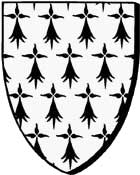
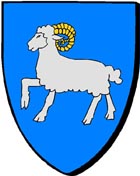
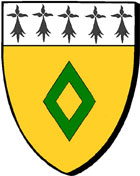
Aujourd'hui dans la région administrative non historique dite 'de Bretagne', département du Morbihan; arrondissement de Vannes; chef-lieu de canton; sur l'Arz.
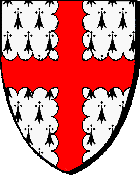
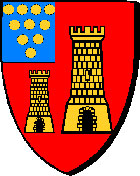

Des monnaies d'argent franques datant du Vè siècle ont été retrouvées à Envermeu. Voir bibliographie : Jean Lafaurie.

* Rivet & Smith, p. 361-362
SOURCE
- Ravenna 10628 (= R&C 59, 60) : EPOCESSA, YPOCESSA
The two names are obviously of the same place; as often, the Cosmographer tried two spellings and failed to delete one from his final version. The second is inaccurate, and could have resulted from an attempt to associate the name (reasonably) with Greek hippo-.
DERIVATION. For *epo-s 'horse' and names based on it, see EPIACUM. The second element is properly -sessa, the Cosmographer's Vulgar Latin speech caused him to represent original s as c, a hypercorrection (since in V.L. c before e and i was assibilated; compare British Gabrocentio in Ravenna 1073 for -sentio, and Brindice 8427 with the more correct Brendesium 697). For -sessa, see CAMULOSESSA. The sense is 'horse-place', perhaps (R&C) 'horse-stalls'; R&C remark that "The English name" "Studfold" or "Steedstalls" is common enough'.
IDENTIFICATION. Unknown, but apparently in the area of the southern Welsh marches.

Elle arrose Beuvreuil, Gournay-en-Bray, Gisors, Gasny, et baptise Saint-Clair-sur-Epte, où fut signé en 911 le traité entre Charles III le Simple et Rollon, chef des Vikings, marquant la naissance de la Normandie historique.
Étymologie :
- DDR : Itta Xè siècle ... Epta 1119 paraît être une mauvaise graphie... racine pré-latine obscure.
- Fr. de. Beaurepaire : Itta.
- M. Grandin, Rivières de France, p 144 : Itta, ou Epta.
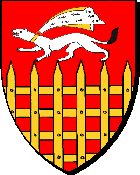
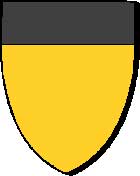
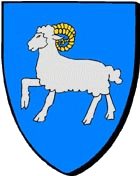
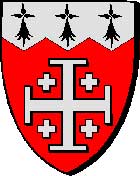
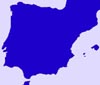
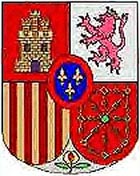
Espagne / Espania / Bro Spagn
Les nations et leurs provinces :
Galice; Asturies; Montana; Pays Basque; Léon; Vieille Castille; Aragon; Estrémadure; Nouvelle Castille; Andalousie; levant; Catalogne.
*****
Galice : La Coruna, Pontevedra, Lugo, Orense
Asturies et Montana : Asturias; Montana
Pays Basque / Eskual Herria / Vascongadas y Navarra : Guipuzcoa, Vizcaya, Alava, Navarra.
Léon : Léon, Palencia, Zamora, Valladolid, Salamanca.
La Vieille Castille / Castilla La Vieja : Santander, Burgos, Logrono, Soria, Segovia, Avila.
L'Estrémadure / Extremadura : Caceres, Badajoz;
La Nouvelle Castille / Castilla La Nueva : Guadalajara, Toledo, Cuenca, Ciudad Real
Aragon : Huesca, Zagora, Teruel.
Catalogne / Catalunya : Gerona, Barcelona, Lerida, Tarragona.
Levant : Castellon de la Plana, Valencia, Alicante, Albacete, Murcia.
Andalousie / Andalucia : Almeria, Cadiz, Cordoba, Granada, Huelva, Jaen, Malaga, Sevilla.
Baléares / Balerares.
Canaries / Canarias.
* Rivet & Smith, The Place-Names of Roman Britain, p 362,
ESSE (?)
SOURCE
- Ravenna 10921 (= R&C 296) : ESSE
The form is meaningless, and may well be a fragment of another name misread from a map because it was written separately; adjacent names in Ravenna or on what we can imagine to have been part of a map do not seem to offer conjectures. The name is listed by the Cosmographer as that of an island, but there is no guarantee that this is right; on the analogy of other names in E-, it is possible that we hae here a part of a river-name.
>>> ces auteurs pensent donc qu'il s'agit d'une erreur d'écriture, sans pouvoir donner la localisation du lieu.
------------
JCE : il existe un lieu-dit Keresse / Keressé, en P. Bretagne, Trégor, commune de Pommerit-Jaudy, près de la rivière Jaudy.
(Liens actifs; liammoù bev: actives links)
D'après des tuiles estampillées qui ont été retrouvées sur le site, il semble qu'Etaples a été une base de la Classis Sambrica., vers le IIè siècle (R. Delmaire, Civitas Morinorum, p 105).
A Etaples se trouve le Musée Quentovic.
Étymologie :
- J. Leroy, Montreuil, p 165 : Stapulum, d'un dérivé germanique "Stapeln" = empiler.
- J. Leroy, Montreuil, p 167-8 : Stapulae.
Archéologie : oppidum gaulois, appelé Camp de César / Le Castelet,
A. Leduque, Ambianie, p 78 : "... d'une superficie de plus de 9 Hectares." "Des amarres auraient été trouvées entre l'Etoile et Hangest-sur-Somme, dans une vaste prairie, indices du transit fluvial".
Étymologie :
- A. Leduque, Ambianie, p 78 : Sidera, diplôme de Clotaire II en faveur de l'abbaye de Corbie -657-661).
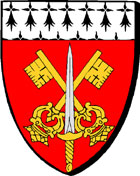
Étymologie :
- référence classique, chez plusieurs auteurs : du latin strata = route, voie.
Désigne localement l'aboutissement à la mer d'une voie romaine venant de Juliobonna / Lillebonne.
- DR : Estrutat, XIè-XIIè; origine obscure.
- R. Soulignac, Calètes, p 99 : "Etretat, son origine n'est pas claire. L'abbé Cochet proposait Strata - estrée, route - que l'on retrouve dans Etrépagny par exemple. Mais cet endroit est plutôt caractérisé par sa situation côtière que par une particularité routière. Doit-on le rapprocher d'Etreville qui a une origine scandinave, dans une région sensible à cette influence ?"
- JCE : ? ystrad : vallée ? (cf. Fr. Gourvil, Noms de famille bretons)
Discussion chez Rivet & Smith, The Place-Names of Roman Britain, p 362.
'ETSODISINAM'
Ravenna's entry for Ireland (Scotia), following a brief general description, occupies 1091-5 (= R&C 272-74). We associate one of three rivers mentioned, Cled, with Scottish Clota, misread from a map as though it related not to Scotland but to Ireland (because the name was written across a much-narrowed Irish Sea). It is probable that the Cosmographer has no information at all for Ireland in his map-source(s) except a coastline labelled Scotia, since he mentions no settlements or ethnic or other names. We may assume that the three 'Irish' rivers belong not to the Irish eastern coast but to western Britain. Etsodisinam has been thought to conceal the name of the Shannon (in other sources Sena, Scena), but it is only the -sinam part which remotely resembles this, and there is no possibility that the Cosmographer's map-sources included the western portion of Ireland where the Shannon flows.
While Terdec remains insoluble, a suggestion can be made about Etsodisinam. Et- might represent et 'also' at the end of the narrative text, but more likely it is a misreading of FI, the abbreviation of Fl(umen) or Fl(uvius), as in other cases. Final -am is unique in the British section and must be corrupt; the -m probably arose from a mark on the British coastline where this name joined it on the map. It is then a question of trying to see which major rivers of western Britain figured on the map which was ultimately the source for Ptolemy and directly the source for the Cosmographer, and which are mentioned by Ptolemy but have not hitherto been identified in Ravenna. The obvious candidate is Belisama; FI Belisama written across the Irish sea was taken to refer to its western end, in Ireland, and not to its eastern end on the Lancashire coast. There is no great palaeographic problem about
FI Belisima
Et Sodisina
when we recall that in related documents we find Isannavantia with S representing B of Bannaventa-1 (AI 4771) and Baromaci for (Ce)saromagi in TP. For e/o and cases of (not precisely relevant) cl/d, see p. 202. On the map the name could well have been written — by assimilation of the Celtic superlative to the Latin one — *Belisima.
The equation seems likely, then, but cannot be absolutely affirmed.
C'est au château d'Eu que Guillaume le Bâtard (devenu le Conquérant) a épousé en 1050 Mathilde de Flandre. Il ne reste rien de ce château, détruit en 1475 sur ordre de Louis XI.
Archéologie gallo-romaine : sanctuaire; théâtre; 2 trésors de la 2ème moitié du IIIè siècle (249-284); nécropole (70 tombes) ...
Étymologie :
- François de Beaurepaire : Auvae (à lire peut-être Awae) fluvium IXè siècle (Vie de Saint Valery), Auga Xè siècle, Flodoard, Richer), Ou 1040-60. Le nom de la ville d'Eu est emprunté à l'ancien nom de la Bresle appelée anciennement Ou, puis Eu, la dénomination de la Bresle n'étant pas rapportée avant le XVIIè en l'état de mes sources. Eu représente le thème hydronymique indo-européen *av, qu'on retrouve apparemment dans le latin aqua et dans l'allemand Au, prairie; Eu est à mettre en relation avec le fleuve Ava en Ukraine, mentionné par l'Anonyme de Ravenne, ainsi qu'avec l'Aff, rivière de Bretagne, désignée Ava au VIIè siècle. Il es intéressant de noter que le nom de la rivière Eu est conservé non seulement par la ville d'Eu, mais aussi par les Haute et Basse Forêt d'Eu, situées à proximité du cours supérieur de la rivière. Selon le même processus l'Elle, rivière du département de la Manche, avait donné son nom à l'ancien massif forestier du Bois d'Elle, encore évoqué par plusieurs noms de communes. Le nom Eu, qui a prévalu de bonne heure sur Ou, correspond à un traitement phonétique particulier à la dialectologie picarde.
- A. Leduque, Ambianie, p 169 : Auga, 925.
- Gh. Gaudefroy, LP, N° 100, p 7 à 20 : Auga, Xè siècle; Augum; Ou; Eu.
"L'étymologie actuellement retenue fait procéder Auga du germanique °Ahwa "eau".
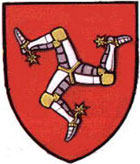
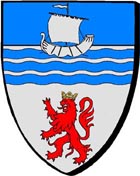
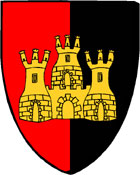
* Rivet & Smith, Place-Names of Roman Britain, p 363.
EXOSADES (?)
SOURCE
- Ravenna 10924 (= R&C 301) : EXOSADES, ubi et gemme nascuntur
DERIVATION. The form in Ravenna is almost certainly corrupt. Williams took it fairly literally and reasoned that the name might represent *Esocades, containing esox 'salmon'; hence perhaps 'sea-salmon islands'. Schnetz in his 1951 translation of Ravenna suggests a miscopying for Electrides, 'Amber Islands', which neatly makes use of Ravenna's gloss about the gemme. It is also possible that Exosades represents Orcades, a paragraph on which follows in the Cosmography. Dillemann (p. 72) suggests a corruption of the Hebudes (= Ebudae) of Pliny NH IV, 103, and explains the note about gems as a misplaced quotation from Jordanes. Within this ample range, one is free to choose.
IDENTIFICATION. Unknown.